Ursula Herrmann: Bavarian Kidnapping, Mazurek, Mystery
Sagsdetaljer
Quick Facts
Ursula Herrmann's fatal ride: Disappeared and found dead
On September 15, 1981, 10-year-old Ursula Herrmann disappeared during a short bike ride from her cousin's house to her home in Eching am Ammersee, Bavaria. She left her cousin's home around 6 p.m. that Tuesday evening for the mere ten-minute ride through the woods on her red bicycle but never arrived. Her disappearance marked the beginning of one of Germany's most shocking and debated criminal cases – a kidnapping that ended tragically when, a few weeks later, Ursula Herrmann was found dead, buried alive in a custom-built box in a nearby forest.
Panic in Eching: Herrmann's nightmare and search efforts
The Herrmann family lived a quiet life in the small Bavarian village of Eching am Ammersee, where the father, Josef, worked as a chief engineer, and the mother, Maria, looked after the home and their three children. The area was considered safe, and children like Ursula moved freely between friends and family. Panic erupted when Ursula's cousin called her parents at 6:15 p.m. to ask if the girl had arrived home safely, and the answer was no. An extensive search was immediately launched, and at 10 p.m. the same evening, local police found her bicycle by the forest path. It was carefully placed with the handlebars facing the road – a detail later interpreted as a possible marker by the perpetrators. Despite a massive effort by over 1,000 volunteers and police officers in the following days, Ursula Herrmann remained missing without a trace.
Kidnappers' trail: Calls, ransom note and forest discovery
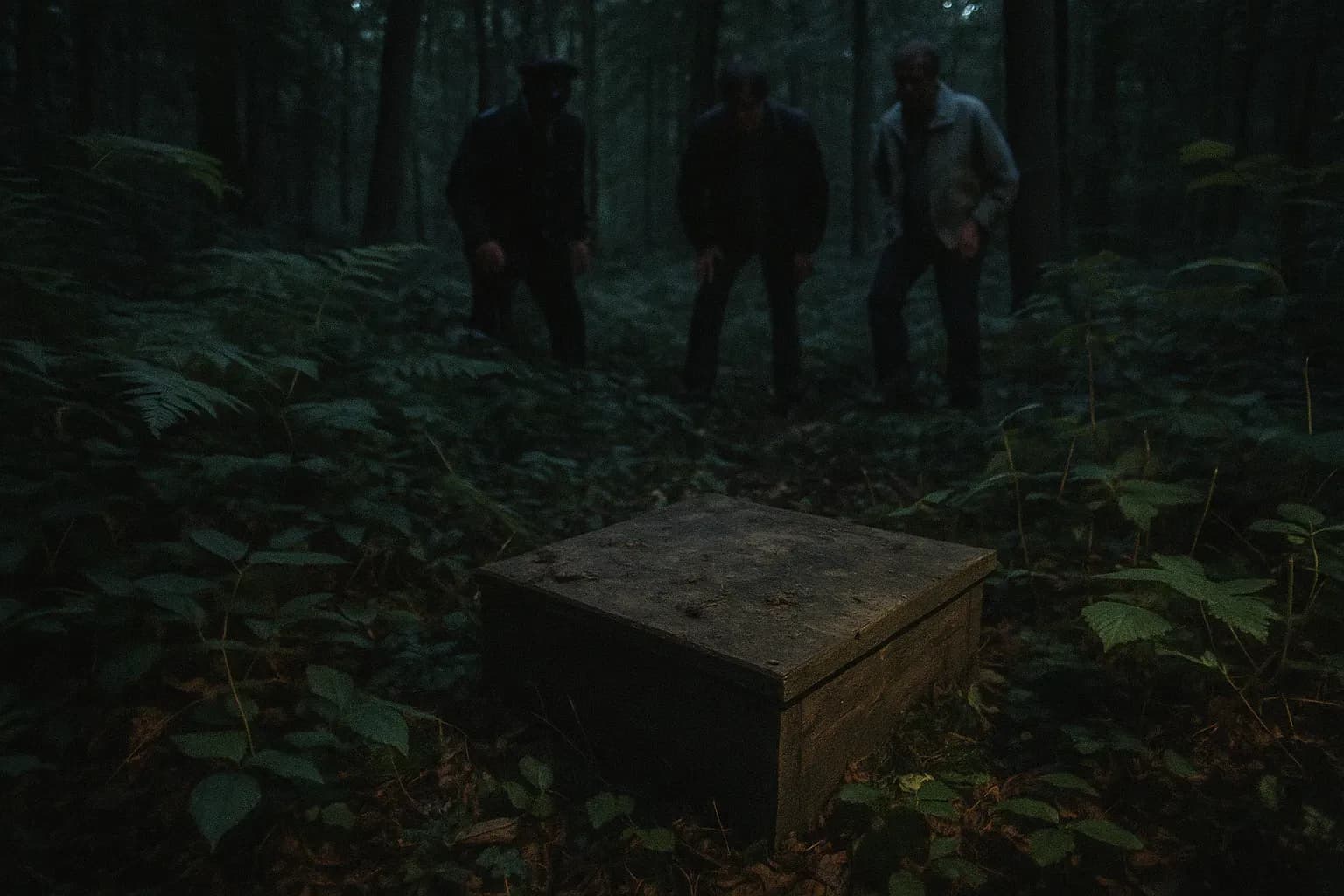
Two days after her disappearance, on September 17, 1981, the family received the first of four mysterious phone calls. A distorted male voice simply played the jingle from the radio station Bayern 3. On September 20, a ransom note arrived, composed of letters cut from newspapers and signed with the initials 'S.G.' The demand was for a ransom of 2 million Deutsche Marks. The letter contained bizarre and detailed instructions for a money drop, which, however, never materialized. The eerie silence lasted until October 2, 1981, when systematic police searches led them deep into the Weingarten Forest. There, they made the gruesome discovery: Ursula's body lay in a handmade wooden box, buried in the ground.
Inside the box: Death, planning, and suspicion on Mazurek
The box, measuring 139x72x60 cm, was a macabre construction – a chilling testament to the planned captivity. It contained an electric light fixture, food items, comic books, and even a reading stand, indicating a cold-bloodedly planned crime. The autopsy revealed the heartbreaking truth: Ursula Herrmann had died of suffocation less than an hour after being placed in the box. The improvised ventilation pipes were insufficient to ensure an oxygen supply. The investigation early on pointed towards a local man, 31-year-old Werner Mazurek. He lived near the Herrmann family and was known to have financial problems. His alibi for the evening – that he had been playing the board game 'Risk' with his wife and friends – faltered under closer police scrutiny.
Investigation halted: Pfaffinger's confession and the tape
A potential breakthrough seemed to occur in January 1982, when an acquaintance of Werner Mazurek, Klaus Pfaffinger, admitted to helping dig the hole for the box. However, Pfaffinger later retracted his confession, but his detailed description of the location matched the police's findings in Weingarten Forest with chilling accuracy. Nevertheless, the case stalled, and it would be 25 years before new technology brought it back into focus. In 2007, police reopened the investigation. Although DNA evidence from the box did not match Mazurek, an old Grundig tape recorder seized from him led to what the prosecution considered crucial evidence. Forensic acoustic experts concluded that the unique clicking sounds from this specific tape recorder matched sounds audible in the background of the mysterious ransom calls from 1981.
Augsburg trial: Life sentence for Mazurek and the tape
This technical analysis, combined with Werner Mazurek's proven financial motive, his interest in police radios, and his shaky alibi, formed the core of the indictment when the case finally went to trial in Augsburg in 2009. The subsequent trial of Werner Mazurek and his wife Irmgard was intensely followed by the media. Over 20 volumes of evidence, mainly consisting of circumstantial evidence, were presented. The judges emphasized Mazurek's technical skills, his debts, and a remark he had allegedly made about the case's statute of limitations. On March 25, 2010, Werner Mazurek was sentenced to life imprisonment for kidnapping resulting in death, while his wife was acquitted. However, the verdict was highly controversial from the outset, and several experts, including Ursula Herrmann's own brother, Michael Herrmann, cast doubt on the reliability of the tape recorder evidence – a key piece of circumstantial evidence.
Herrmann's fight: Lawsuit against Mazurek, evidence rejected
However, Michael Herrmann refused to let the matter rest. In 2013, he filed a civil lawsuit against the convicted Werner Mazurek in a persistent attempt to uncover the truth about his sister's death. During this process, which ran from 2016 to 2018 at the Augsburg court, he presented new evidence. This included graphological analyses suggesting the ransom note was written by someone with a higher education, which did not fit Mazurek, who only had a primary school education. A review of old police reports also revealed potential irregularities in the handling of previous evidence. However, the court declined to reopen the criminal case but awarded Michael Herrmann 7,000 euros in compensation for the psychological distress the tragic case had caused him.
Mazurek released (2023): Innocence claims and unsolved clues
Werner Mazurek was released on parole in June 2023 after serving 13 years of his life sentence. He has always maintained his innocence and stated in a rare 2019 interview that he felt victimized in a political process and that the truth about Ursula Herrmann's death was still buried. Concurrently, private investigators and critics have pointed to unresolved leads – elements contributing to doubts about whether the case can truly be considered fully solved, despite the conviction. These leads include a mysterious white van seen near the crime scene and unidentified DNA traces found on the box. The Ursula Herrmann case continues to cast long shadows in Germany. Legal experts criticize the original verdict for relying too heavily on technical circumstantial evidence, like the forensic acoustic analysis, rather than hard evidence. Although an official review in 2021 concluded that procedural errors had occurred, but no deliberate misconduct by the authorities, the fight for the Herrmann family is not over. Michael Herrmann has repeatedly declared that he will continue his search for answers until all aspects of his sister's tragic fate – her kidnapping and suffocation – are fully illuminated.
Shaken by Ursula Herrmann's fate? Follow KrimiNyt for more in-depth cases on kidnapping, unsolved mysteries, and controversial verdicts.
Susanne Sperling
Admin