Titangade Rocket Attack: Climax of Biker War 1996
Sagsdetaljer
Quick Facts
Titangade: Rocket vs Hells Angels, two killed in climax
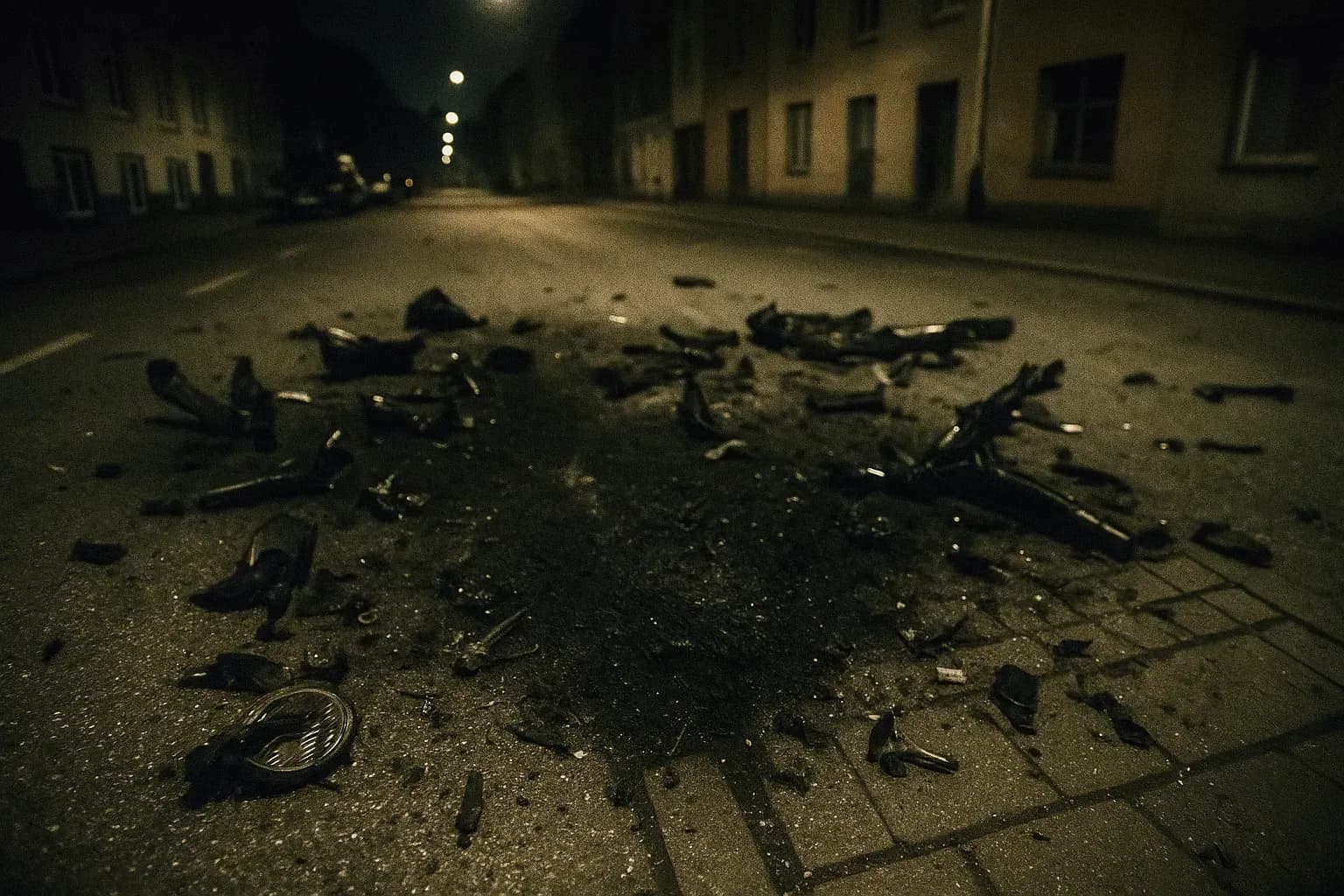
In the early hours of October 6, 1996, at three o'clock, an anti-tank rocket tore through the darkness over Copenhagen. A deafening explosion from the violent rocket attack shook the Hells Angels' clubhouse at Titangade 2-4 to its foundations, and flames along with thick smoke billowed out. Two people lost their lives: the aspiring Hells Angels biker Louis Linde Nielsen and an innocent guest, Janne Krohn. They became victims of one of the most notorious attacks in Nordic criminal history – an attack that marked a bloody climax in the Great Nordic Biker War, a brutal conflict that had ravaged Scandinavia for three years.
Hells Angels vs Bandidos: Honor and land spark biker war
From the underworld of Helsingborg to the streets of Oslo, Hells Angels and Bandidos fought a fierce battle for honor, territory, and control over lucrative criminal markets. This war between the rival motorcycle clubs cost numerous lives and shook public confidence. But how could a rivalry between these groups escalate into such violent gang crime?
Hells Angels in Scandinavia: From 1980 to criminal networks
After the end of the Cold War, a new type of battlefield emerged in the Nordic countries. Hells Angels' establishment in Scandinavia in 1980 marked the beginning of an ominous development, where motorcycle clubs gradually transformed into transnational organized crime networks. In Denmark, the former United MC became Hells Angels MC Denmark, while rival groups like Bullshit MC and Undertakers MC quickly positioned themselves as adversaries.
Criminal transformation: Bikers, drugs and weapon findings
The transformation from motorcycle enthusiasts to hardened criminal syndicates occurred gradually, driven by the enormous profits in international drug and arms trafficking. As Detective Superintendent Per Larsen of the Copenhagen Police stated in 1996: 'They treat each other as enemies of the state. Their arsenal of weapons can be compared to that of a small army.' This claim was chillingly confirmed by numerous police seizures, which included everything from Carl Gustaf anti-tank rockets and hand grenades to machine guns – weapons later used in several shootings and bombings.
Bandidos' threat: Challenging Hells Angels' drug dominance
Bandidos MC's aggressive expansion into the Nordic drug market inevitably created major friction. They began to directly challenge Hells Angels' existing monopoly on lucrative routes for hashish trafficking from Morocco and amphetamine from Poland. Behind these strategic power struggles for market share also simmered deep personal conflicts and a strong focus on honor and respect.
Morbids MC's 'no': Bandidos alliance sparks wrath in 1994
When the small motorcycle club Morbids MC, with only six members, refused to submit to Hells Angels' authority in 1994, they unwittingly started a fatal chain reaction. Morbids MC's subsequent alliance with, and later full absorption into, Bandidos MC was perceived as a direct provocation and a personal insult by Hells Angels. 'It wasn't about money, but about respect,' an anonymous Bandidos veteran explained in a rare interview many years later.
Ambush on E4: Bandidos President Ljunggren murdered
This toxic cocktail of battles for territory, criminal enterprises, and deeply felt personal grudges led to a spiral of extreme violence. One of the most brutal examples of this violence was the murder of Bandidos' Swedish president, Michael 'Joe' Ljunggren, on July 17, 1995. Ljunggren was killed in a well-planned ambush on the E4 motorway near Emmaboda, Sweden, where his Harley-Davidson ended up bloodied on the roadside after a shooting.
War weapons and victims: Rockets, guns and casualties
Michael 'Joe' Ljunggren's murder was just one of many bloody chapters in an extensive war where heavy weapons such as anti-tank rockets, hand grenades, and machine guns were used as tools in the struggle for power and control. The Great Nordic Biker War left deep scars in Scandinavia and exposed the ruthless brutality of organized criminal networks. Their internal conflicts and gang crime resulted in deadly violence and had fatal consequences, not only for the criminals themselves but also for innocent third parties.
Want to read more stories about organized crime and gang wars? Follow KrimiNyt and never miss the next case.
Susanne Sperling
Admin