The Sass Brothers: From Heists to Nazi Execution
Sagsdetaljer
Quick Facts
Sass Brothers: From Moabit poverty to Berlin's top thieves
In the shadows of Berlin's Golden Twenties, an era where culture and nightlife flourished with jazz and decadence, operated two brothers whose names became synonymous with daring and technical ingenuity: Franz and Erich Sass. As sons of a poor tailor from Moabit and a laundress, they etched their names into the city's criminal history through a series of spectacular bank robberies. These heists combined engineering precision with theatrical flair. Their life story, from childhood poverty to the Nazi execution squads, unfolds like a tragicomic montage of the Weimar Republic's contradictions.
Early crime: Franz and Erich Sass in Moabit
The family home in Moabit, a damp apartment of just 40 square meters shared by five sons, shaped the brothers' early lives. Their father's modest income as a uniform tailor was seldom enough. As early as the late 1910s, Franz (born 1904) and Erich (born 1906) began their criminal careers with petty thefts that escalated to shop burglaries. Although four of the five Sass brothers had run-ins with the law, it was Franz and Erich's partnership that achieved legendary status.
Auto shop in Berlin: Cover for heists with a welding torch
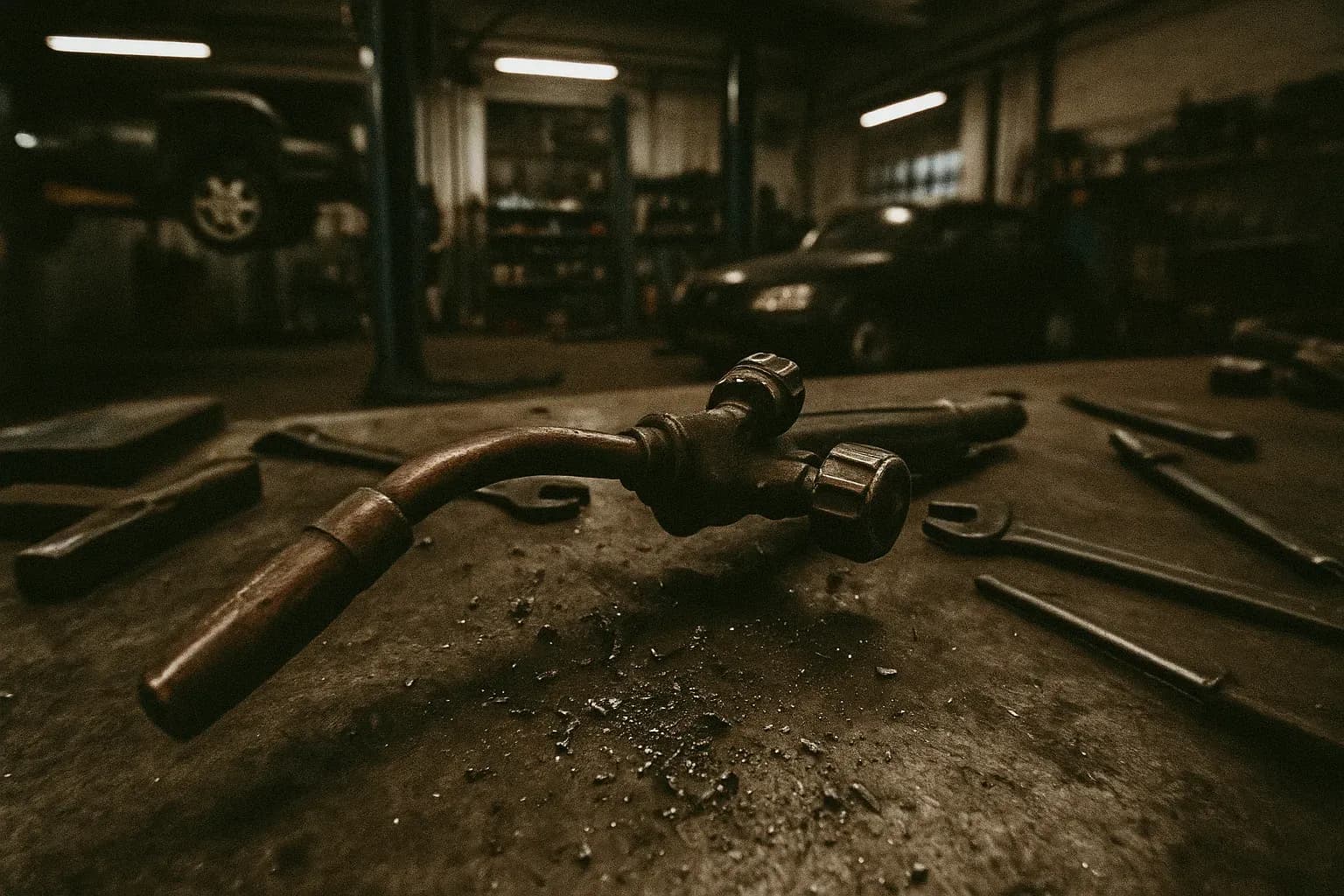
After their apprenticeships as car mechanics in the 1920s, which gave them intimate knowledge of tools and metal weaknesses, Franz and Erich Sass established a small workshop. The workshop quickly served as a sophisticated cover for their criminal activities; rumors circulated that it was a 'perfect laundry for illegally earned money,' suggesting forms of fraud. Their true breakthrough in bank robbery came with the innovative use of welding torches, a new technology at the time.
From failure to success: Sass brothers' breakthrough
Their first major bank robbery in March 1927, against the Deutsche Bank branch in Moabit, ended in a spectacular failure. They had underestimated the oxygen consumption in the cramped basement. After several failed attempts on targets like Dresdner Bank and the Reichsbahn directorate, they perfected their technique. In May 1928, a heist against the Landesfinanzamt Moabit succeeded, where they allegedly stole 9 million Reichsmarks – an amount that was never definitively proven. Detective Inspector Max Fabich, a persistent police investigator, found only circumstantial evidence in his pursuit of the brothers. Their signature – abandoned welding equipment and empty wine bottles at each crime scene – became a notorious trademark.
Disconto-Gesellschaft heist (1929): 32-meter tunnel
On January 27, 1929, after midnight in Berlin, the Sass brothers launched their most ambitious bank robbery. Through weeks of nightly work, they dug a 32-meter-long tunnel from a cellar near Wittenbergplatz, under the railway tracks, and directly into Disconto-Gesellschaft's vault room. They broke through a ventilation shaft and 1.5 meters of reinforced concrete to reach the otherwise 'impregnable' safe. The scene that greeted the police at this crime scene was like something out of a gangster film: 179 out of 181 safe deposit boxes had been emptied. The brothers had allegedly celebrated the heist with red wine; empty bottles lay scattered among abandoned silver bars and bonds.
After Disconto heist: Hero status and police challenges
The damage from the Disconto heist was estimated at 2 million Reichsmarks, but the actual loss remained unknown, as many victims refrained from reporting undeclared money. The police arrest of the brothers turned into a media circus when they had to be released due to lack of evidence. During a subsequent press conference at a fine restaurant, they proclaimed their innocence, accused the police of harassment, and cemented their image as folk heroes – an image further strengthened by rumors that they distributed some of the loot to the poor in Berlin.
Inspector Fabich's blunder: Sass brothers' life of luxury
In 1929, Detective Inspector Fabich attempted to trap the brothers by exposing an underground den in a cemetery, likely another cellar used for preparing a bank robbery. The plan failed when Franz discovered the police surveillance and sought refuge with their lawyer. The alibi held, and the brothers continued their extravagant lifestyle with expensive cars and silk shirts in Berlin.
Escape from Hitler: From Copenhagen to Sachsenhausen
The Nazi takeover with Adolf Hitler in 1933 forced the Sass brothers to flee from Berlin to Copenhagen, Denmark. There, they attempted to resume their criminal careers, but a failed heist against a Danish bank in 1934 led to their capture. They were later extradited to Germany in 1938. Under brutal violence and torture by the Gestapo, they refused to reveal the hiding place of the Disconto loot. Originally sentenced to 13 and 11 years of penal servitude, their sentences were overturned by Heinrich Himmler personally. On March 27, 1940, Franz and Erich Sass were executed in the Sachsenhausen concentration camp, a fate that underscores the regime's brutality and can be seen in light of later war crimes.
Sass legend: Legacy in culture and missing loot
The historical legacy and legend of the Sass brothers live on, partly through Paul Gurk's novel 'Tresoreinbruch' (Safecracking) (1934) and the film 'Sass' (2001). Treasure hunters still speculate whether their undiscovered loot from various bank robberies lies buried in the Grunewald forest near Berlin.
From heroes to victims: Sass brothers' fate under Nazis
From the backyards of Moabit in Berlin to Nazi bullets, the Sass brothers' story depicts an era where the law could be challenged, but totalitarianism crushed individualists. Their lives reflect the chaos and dark undercurrents of the Weimar Republic – a time when a daring bank robbery could lead to popular fame, only to end in a brutal execution under a merciless regime. Their demise, which can be seen as a form of summary execution ordered by the state, underscores the regime's brutality.
Follow KrimiNyt for more in-depth cases about daring heists, historical crimes, and fates from the dark side of reality.
Susanne Sperling
Admin