The Albino Murders: Superstition's Bloody Cost
Sagsdetaljer
Quick Facts
Matatizo's murder: Reality for albinos in Africa
On December 9, 2008, shortly after two in the afternoon, 14-year-old Matatizo Dunia left his home in the village of Bukombe in Tanzania's Shinyanga region to fetch water. He never returned. The boy, who had albinism, was attacked by three men who hacked off his limbs with a machete and left his mutilated body in a bush. This brutal murder was not an isolated incident but part of a systematic wave of violence and persecution that has plagued East Africa since 2006. In Tanzania alone, at least 54 people with albinism were murdered between 2007 and 2009, primarily in the northwestern regions. A similar wave of violence hit Malawi from 2014, with at least 170 attacks on people with albinism recorded up to 2023. The victims, both children and adults, had their body parts sold on a gruesome black market, driven by deeply rooted superstition.
$75,000 superstition: Albino body parts black market
Behind this human tragedy and numerous murders lies a toxic cocktail of superstition and cynical economic exploitation. According to local folklore, particularly prevalent among tribes such as the Mang'ati and Maasai in Tanzania, people with albinism are considered ghosts or 'cursed.' Their body parts are attributed magical powers – a notion exploited by a profitable underground industry specializing in trafficking these body parts. An arm or a leg could, according to police estimates, fetch up to $75,000 on the black market. So-called witch doctors, or traditional healers, play a central role in this macabre trade and its associated rituals. In 2008, Tanzanian journalist Vicky Ntetema revealed during an undercover operation how these healers openly offered body parts from people with albinism to wealthy clients. 'It is often politicians or business people seeking power to ensure election victory or economic prosperity,' an anonymous source explained. One of the most bizarre practices allegedly involved burying wealthy individuals along with four living people with albinism to ensure prosperity in the afterlife.
Betrayal to murder: Mariam and Goodson's fates
Among the many harrowing fates is the story of 8-year-old Mariam from the Mwanza district in Tanzania. In 2010, she was subjected to a violent assault by her own father, who, in a shocking betrayal, attempted to sell her right arm to a witch doctor. Mariam miraculously survived but had to undergo numerous surgeries. Her mother, Amina, recounted: 'My husband was tempted by money. He said that with the 500,000 shillings, we could build a new house. But why should our daughter's life be the price?' This type of crime, where a family member is involved, can be seen as a form of premeditated violence that, in its ultimate consequence, could have been a family murder for profit. In Malawi, 22-year-old teacher Goodson Makanjira became a symbol of resistance against the widespread violence. After surviving a machete attack in 2017, in which he lost his left hand, he became a prominent advocate for the human rights of people with albinism. 'They took my hand, but not my voice,' he declared. His fight came to a tragic end in 2020 when he was found murdered in his home – an unsolved case that sent shockwaves through the local community.
Justice for Matatizo: Sentences and Malawi's fight
The Tanzanian government responded hesitantly to the escalating crisis. Only in 2009, after significant international pressure, did President Jakaya Kikwete ban witch doctors and launch a national action plan. A crucial milestone in the fight for justice was reached on September 23, 2009, when the High Court in Shinyanga sentenced three men to death for the murder of Matatizo Dunia. This verdict in a high-profile trial was the first ever in a case involving the murder of a person with albinism in Tanzania. 'This is just the beginning. There are 52 families still waiting for justice,' stated Ernest Kimaya from the Tanzania Albino Society after the ruling. Malawi later followed suit with a four-year national action plan in 2018, focusing on protection, prosecution, and education. Another significant trial took place in Malawi in 2021, where five men, including a police officer and a Catholic priest, were sentenced to 30 years in prison for stealing body parts from the grave of a deceased man – a man with albinism. Judge Redson Kapindu emphasized: 'These crimes require exemplary sentences to send a clear signal to society.'
Canada to Human Rights Court: Historic ruling
International attention and action followed. Canadian Peter Ash, himself born with albinism, founded the organization Under The Same Sun in 2009 after reading about the horrific situation. 'I couldn't sit idly by in Canada while my fellow human beings were being slaughtered,' he explained. Under The Same Sun has played a central role in documenting over 200 attacks and murders in East Africa and has pressured the UN for action. This led to the UN Human Rights Council adopting resolution 23/13 in 2013, urging states to protect the human rights of people with albinism. A landmark turning point came on February 7, 2025, with a ruling from the African Court on Human and Peoples' Rights. In this high-profile case, the court found Tanzania guilty of failing in its duty to protect. The country was ordered to amend its Witchcraft Act of 1928, establish a compensation fund, and implement a new national action plan. 'This ruling is a historic step towards justice for all people with albinism in Africa,' declared UN Independent Expert Muluka-Anne Miti-Drummond.
The fight continues: Resistance against persecution
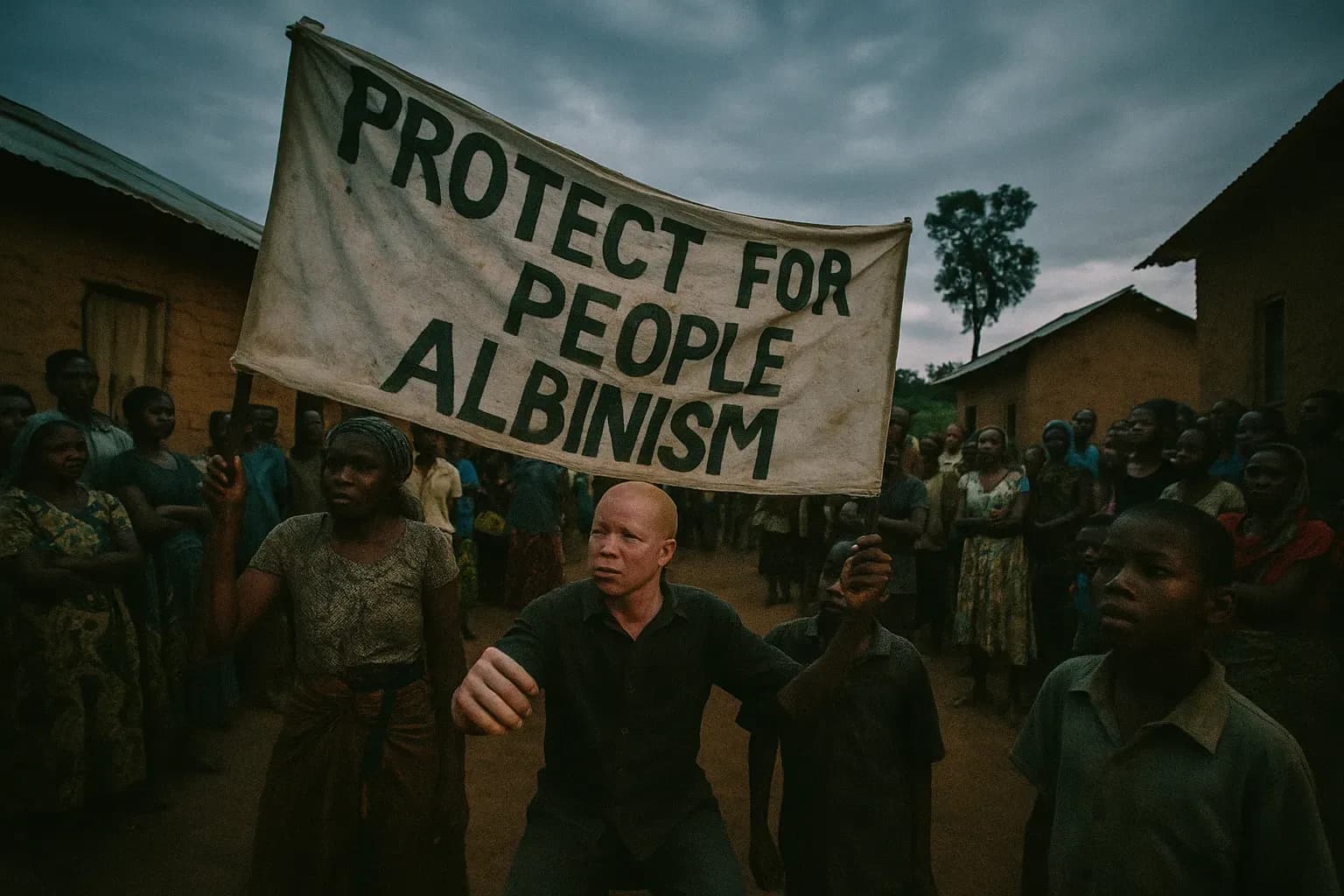
Despite these advancements, the fight for the safety and human rights of people with albinism is far from over. In Tanzania, around 16,000 people with albinism continue to live under constant threats of violence and murder. In Malawi, police reported new cases of grave robbery as recently as 2023, where the bodies of people with albinism were desecrated to steal body parts for use in rituals based on superstition. However, there are also signs of hope. In 2024, the Tanzanian government launched a new five-year strategy focusing on healthcare services, education, and rights protection. Local activists like Zaituni Ndalama in Malawi have organized protection groups that protect children with albinism on their way to school. 'We have seen a declining trend in attacks since 2020, but the fight is far from over,' Ndalama notes. The harrowing albino murders in Tanzania and Malawi reveal a brutal reality where superstition and greed result in human trafficking and tragic killings. However, through the courage of local activists, international efforts, and historic court cases, including those at the African Court on Human and Peoples' Rights, a path towards lasting justice is gradually emerging. As Judge Stella Anukam from the African Court on Human and Peoples' Rights stated in 2025: 'It is time to turn words into action – every person with albinism deserves to live in dignity and freedom.'
Shocked by the brutal albino murders? Follow KrimiNyt for more in-depth cases on human trafficking and the fight against the dark sides of superstition.
Susanne Sperling
Admin