Delphi Murders: Abby, Libby, and Richard Allen’s Fate
Sagsdetaljer
Quick Facts
Abby and Libby’s last day: Snapchat and eerie recording
On February 13, 2017, at 1:35 PM, friends Abigail Williams, 13, and Liberty German, 14, were dropped off at the Monon High Bridge trail in Delphi, Indiana. They had planned a short walk on a day off from school – a seemingly ordinary afternoon that would tragically turn into one of America's most talked-about criminal mysteries, a case that captured the attention of true crime enthusiasts and was long considered unsolved. Just minutes later, at 2:07 PM, Liberty, known as Libby, took a Snapchat photo of Abigail, often called Abby, as she crossed the old railway bridge. This became the last known photo of the girls alive. Shortly thereafter, Libby recorded a chilling video on her iPhone in which a man's voice can clearly be heard saying the ominous words: 'Guys... down the hill.' This audio recording, along with a grainy image of a man in a blue jacket and jeans from Libby's video, became crucial video evidence and key clues in the subsequent investigation of the murders.
Discovery: Asphyxiation, slashed throats, and DNA trace
After nearly 24 hours of intense searching, the girls' bodies were found on February 14, shortly before noon, on the north side of Monon High Bridge, about a kilometer from where they were last seen. The subsequent autopsy, a key element in forensic medicine, determined that both Abigail Williams and Liberty German had been killed by asphyxiation and had their throats cut. Libby was found naked and bloody; Abby was wearing some of Libby's clothes. Forensic examinations found no signs of sexual assault. However, a scant trace of male DNA evidence was secured from under Libby's fingernails, but the amount was unfortunately too small to create a full DNA profile, complicating the investigation into this double homicide of the two teenagers.
Years of investigation: Allen’s alibi and bullet clue
The investigation into the murders of the two teenagers stalled for years without a significant breakthrough. Richard Matthew Allen, a 52-year-old local pharmaceutical technician from Delphi, voluntarily contacted the police just three days after the murders. He explained that he had been on the Monon High Bridge trail that fateful afternoon to observe birds and check stock prices. Allen's alibi, which involved a visit to his mother, was weakened, however, when cell phone data placed his phone near the bridge between 1:50 PM and 3:11 PM that day. The breakthrough in the case came in September 2022, when volunteers reviewed thousands of tips. A retired social worker, Kathy Shank, rediscovered Allen's original statement. This triggered a new investigation focusing on Richard Allen's .40-caliber Sig Sauer pistol. An unspent bullet, found near the girls' bodies, was linked to Allen's weapon through ballistics evidence due to microscopic rifling marks – a method, however, that was later criticized by defense experts during the subsequent trial. Although a shooting was not the direct cause of death, the weapon became a key piece of evidence.
2024 trial: Confessions, motive theory, and DNA gaps
The trial of Richard Allen, which began on October 18, 2024, was filled with dramatic moments. The prosecution presented recordings from prison phone calls in which Allen allegedly repeatedly confessed to the murders to his wife, saying: 'I did it. I killed Abby and Libby.' The defense, however, claimed that these confessions stemmed from psychotic episodes induced by Allen's prolonged isolation in prison. The prosecutor postulated that Richard Allen had planned a sexual assault but was interrupted by a car, after which he panicked and killed the girls. This motive, however, contradicted the forensic findings, which the defense highlighted as a weakness. No conclusive DNA evidence or fingerprints were found that directly linked Allen to the crime scene of the Delphi murders.
Delphi verdict: Allen gets 130 years, appeal announced
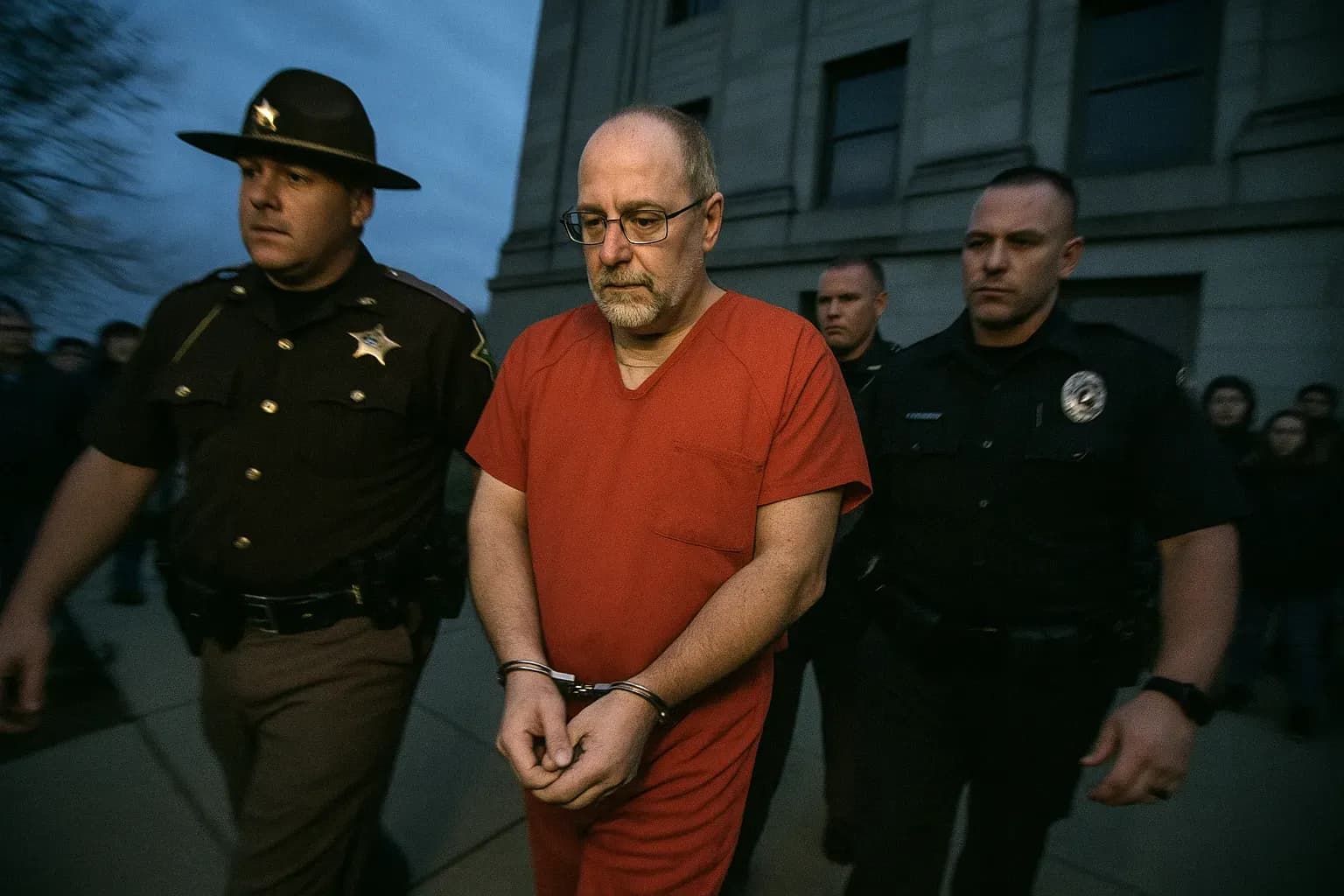
In the small town of Delphi, Indiana, the tragedy has left deep scars on the local community. A memorial park, the Abby and Libby Memorial Park, featuring softball fields and an amphitheater, has been built in honor of Abigail Williams and Liberty German, funded by donations from across the USA. Abby's mother, Anna Williams, describes the park as a symbol of the girls' passion for sports and music, and a place of solace. On December 20, 2024, Judge Frances Gull delivered her verdict: Richard Allen was sentenced to 130 years in prison – 65 years for each murder, to be served consecutively. In her statement, Judge Gull described these murders as among the most heinous in Indiana's legal history. Richard Allen's defense immediately announced an appeal, which is expected to challenge technical errors in the presentation of evidence and alleged procedural errors during the trial.
After verdict: Questions, Odinism theories, tech's role
Despite Richard Allen's conviction, many questions about the Delphi murders remain unanswered. The defense's claim during the trial that the murders of Abigail Williams and Liberty German were a ritualistic killing carried out by an Odinist cult was excluded from evidence but persists as a tenacious conspiracy theory on social media. The Delphi community has expressed frustration that Allen's initial 2017 contact with police was not more thoroughly investigated. This tragic case has also highlighted the crucial role of technology in modern criminal investigations; Libby's iPhone video evidence and the audio recording of the 'down the hill' voice were essential. This has sparked national discussions about young people's digital safety and police handling of electronic evidence, resulting in new FBI guidelines. The upcoming appeal process will likely reopen debate on the validity of ballistics evidence and questions regarding Richard Allen's mental state. For the families and residents of Delphi, however, Allen's conviction marks the beginning of a new phase in processing the tragedy that has forever marked the town's history, even though the full extent of the case may never be fully understood.
Want more in-depth analyses of complex criminal cases and true crime mysteries? Follow KrimiNyt to uncover the darkest sides of reality.
Susanne Sperling
Admin