Beverly Allitt: 'Angel of Death' – 4 children's deaths
Sagsdetaljer
Quick Facts
Spring 1991: Allitt's 59-day terror in children's ward
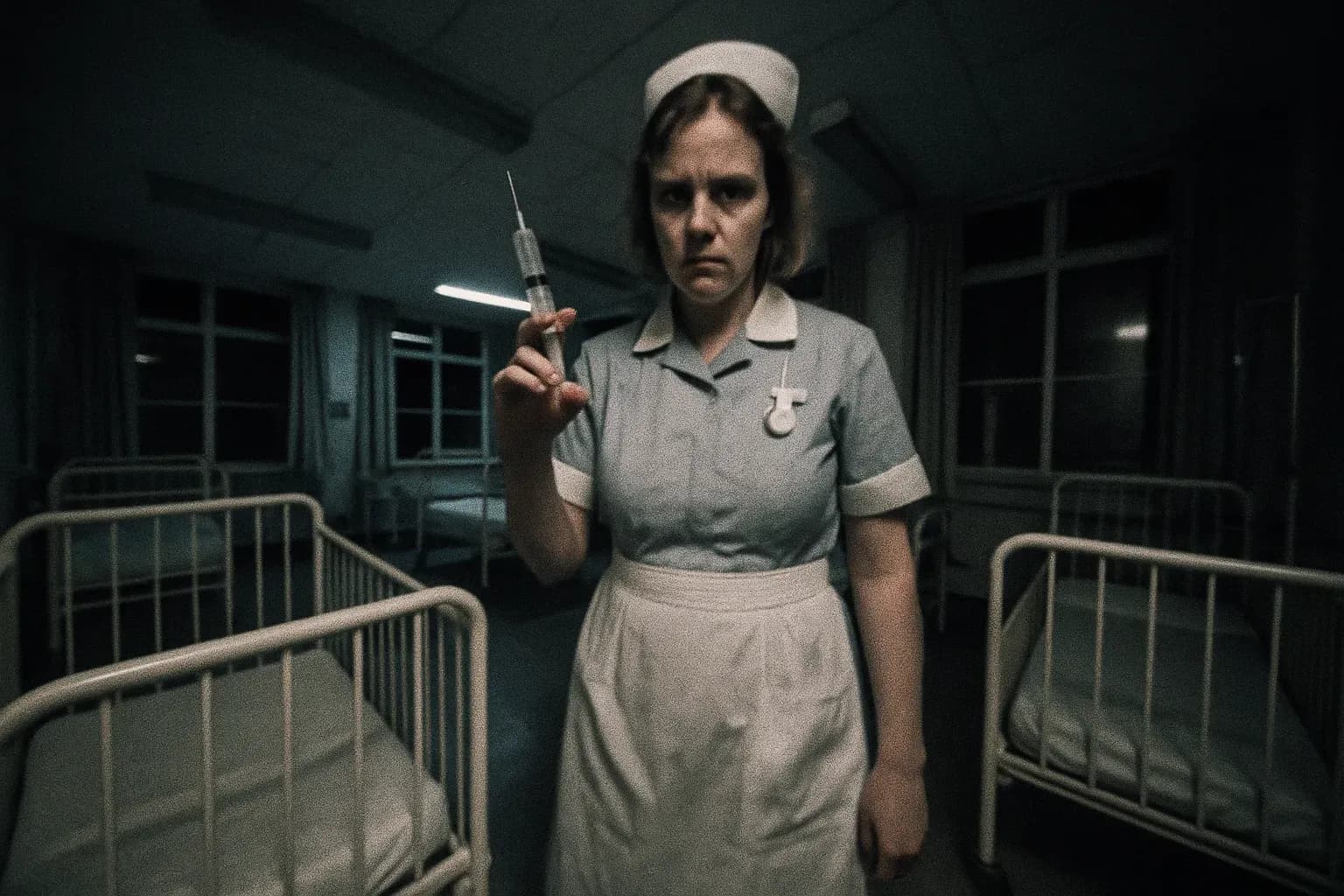
In the spring of 1991, over 59 horrifying days, Grantham and Kesteven Hospital in Lincolnshire became the center of a series of tragic incidents in its children's ward – events that initially appeared as an unsolved case of unexplained medical complications. Behind these attacks was 22-year-old nurse Beverly Allitt, later infamous as the 'Angel of Death.' She was responsible for attacks on 13 innocent children, four of whom died, and nine others suffered permanent harm. Allitt's methods were characterized by cunning manipulation and gross violence; she abused her trusted position and the parents' confidence to harm the children by administering lethal insulin overdoses, causing air embolisms, or employing suffocation. These acts of poisoning and physical assault occurred while she was on duty.
February 1991: Liam Taylor's death – Allitt's first victim
The horror began in February 1991, when seven-month-old Liam Taylor was admitted to Grantham and Kesteven Hospital with a chest infection. His parents left the hospital reassured that nurse Beverly Allitt would watch over him. However, shortly thereafter, Liam developed unexplained respiratory collapses and died. A subsequent autopsy revealed a massive insulin overdose – a clear case of poisoning inconsistent with his original medical condition.
Beverly Allitt: From attention-seeking to nursing role
Beverly Gail Allitt, born in 1968 in Great Britain, exhibited signs of attention-seeking behavior early in life, such as wearing unnecessary bandages. Despite failing several nursing exams, she was employed in 1987 as a State Enrolled Nurse (SEN), a nursing position with limited responsibility.
The Phillips twins: Becky died, Katie's lasting injuries
One of the most horrifying examples of Beverly Allitt's atrocities was the tragedy that befell twins Becky and Katie Phillips. Becky was admitted in April 1991 with gastrointestinal problems. Under Allitt's 'care,' she experienced repeated hypoglycemic attacks – a direct consequence of poisoning – which led to severe brain damage and her death. In a tragic irony, and unaware of the nurse's role in Becky's death, the girl's mother asked Allitt to be godmother to the surviving twin, Katie. Allitt accepted, all the while deliberately causing oxygen deprivation in Katie, resulting in permanent cerebral palsy and vision loss for the vulnerable child.
Claire Peck's death shows pattern: Investigation starts
It was only after the death of 15-month-old Claire Peck, who died from an air embolism caused during Beverly Allitt's shift, that staff at Grantham and Kesteven Hospital began to suspect a sinister pattern. It emerged that all the unexplained collapses and deaths among children in the ward occurred when Allitt was on duty. Several children had suspicious injection marks or abnormal blood values, indicating deliberate harm. The police were called, and the investigation revealed that insulin vials and potassium chloride – substances Allitt had access to as a nurse – had disappeared from the hospital's stock.
1993 trial: Allitt's 4 murders, sentenced to 13 life terms
During the subsequent trial in 1993, the prosecution presented advanced blood analyses that unequivocally proved several children had been poisoned with insulin. The defense attempted to argue that Beverly Allitt suffered from Münchausen syndrome by proxy, a condition where a caregiver induces illness in another to gain attention. However, the court rejected this explanation. Beverly Allitt was found guilty of four murders, eleven attempted murders, and fourteen counts of grievous bodily harm – a series of crimes that cemented her status as one of Britain's most notorious female serial killers. She received thirteen life sentences, which at the time was the harshest sentence handed down to a female serial killer in Britain. In his sentencing, Judge David Latham emphasized that Allitt posed a 'continuing danger to society' and would likely never be released.
Clothier Report: Hospital failings and ward closure
A subsequent official inquiry, known as the Clothier Report, uncovered serious failings in management and procedures at Grantham and Kesteven Hospital. The report concluded that numerous warning signs, including Beverly Allitt's unusual behavior and her insistence on working extra shifts in the children's ward, had been overlooked. As a direct consequence of these failings, two doctors lost their positions, and the specific children's ward at the hospital, where this horrifying series of violence and poisoning occurred, was permanently closed.
Victims' suffering: Katie Phillips' care, Paul's injuries
For the victims' families, the consequences of Beverly Allitt's crimes have been lifelong and heartbreaking. Katie Phillips, one of the surviving children, received significant compensation in 1999 to cover her need for lifelong care after the brain damage Allitt inflicted on her. Paul Crampton, who survived a potassium overdose as an infant, now suffers from chronic kidney damage. The Beverly Allitt case has drawn grim parallels to later, similar cases within the British healthcare system and has persistently raised critical questions about systemic weaknesses and patient safety in hospitals.
Criminal profile: Allitt's possible personality disorder
Criminologists have analyzed Beverly Allitt's behavior and psychological profile. Many point to a possible combination of borderline personality disorder and strong narcissistic traits, which may have driven her pathological need for control and power, achieved through creating chaos and suffering. This type of behavioral pattern can, in some cases, overlap with traits seen in psychopathy, particularly the lack of empathy and a manipulative ability. Even while incarcerated, Allitt has continued self-harming behavior. Staff at the psychiatric institution where she is detained describe her as a masterful manipulator, still capable of alternating between superficial charm and direct threats.
Allitt's 2001 denial: 'Angel of Death's' grim legacy
In 2001, in her only public statement to date, Beverly Allitt claimed to be a victim of a justice system she believed was biased against women – a claim that starkly contrasts with the evidence from her trial. Today, the permanently closed children's ward at Grantham and Kesteven Hospital stands as a grim memorial to one of the darkest periods in the British healthcare system. The story of nurse Beverly Allitt, the 'Angel of Death,' remains a chilling reminder of how trust can be fatally abused, highlighting enduring questions about accountability and the prevention of similar crimes within systems designed to heal and protect the most vulnerable: children.
Want to read more stories about serial killers, medical crimes, and systemic failures? Follow KrimiNyt and never miss the next case from the dark side of reality.
Susanne Sperling
Admin