Belle Gunness: From immigrant to serial killer
Sagsdetaljer
Quick Facts
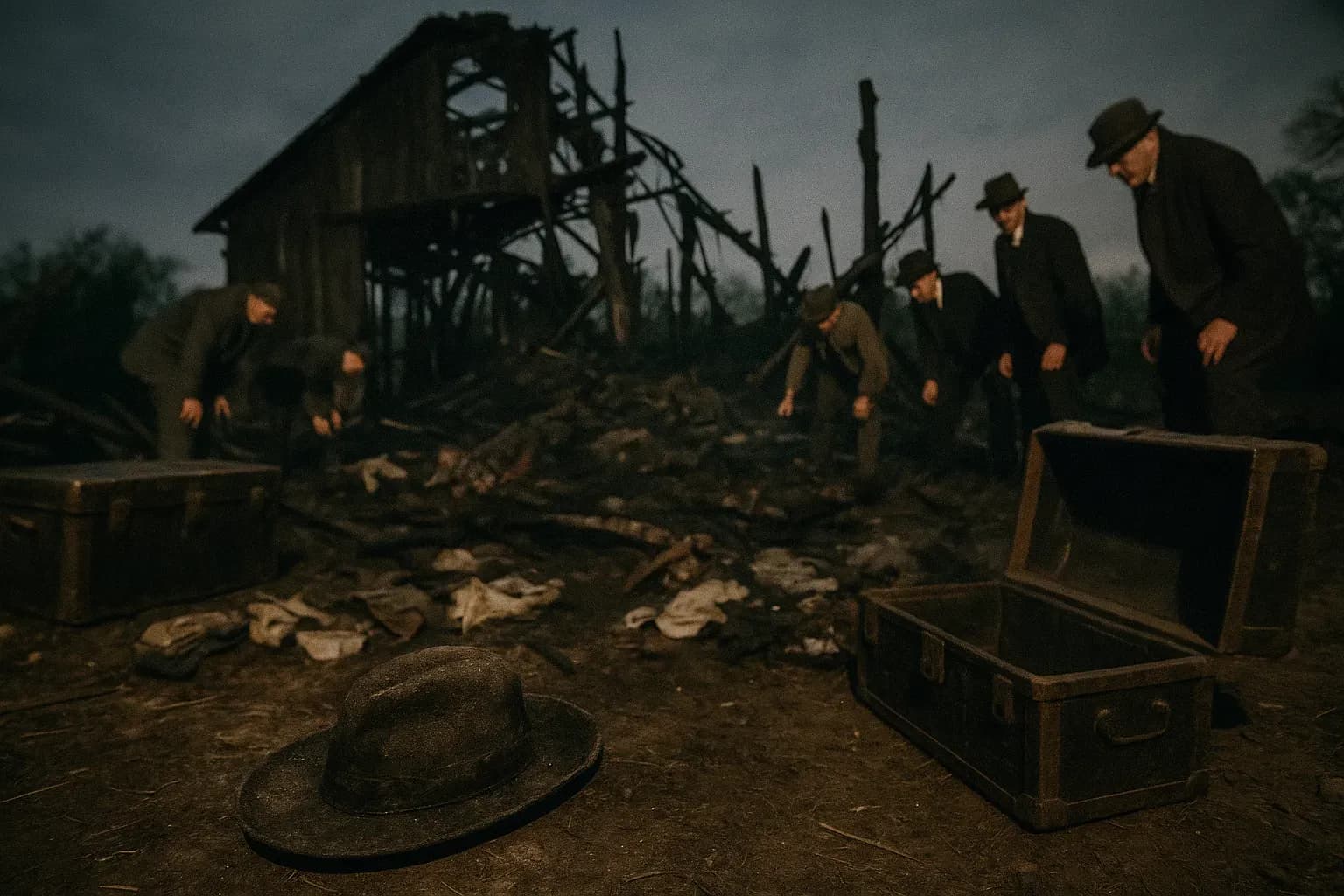
The Gunness farm fire of 1908: Over 40 bodies discovered
Dense, black smoke rose into the early morning sky over Indiana on April 28, 1908, as Belle Gunness's notorious farm near La Porte was engulfed in flames. Firefighters later found four charred bodies in the ruins: a headless woman and three children. But this was only the beginning of one of America's most macabre criminal cases, centered on an infamous female serial killer. In the following weeks, police uncovered over 40 human bodies, buried beneath the hog pit and in the garden – victims of a woman whose cruelty and calculation fueled intense speculation about whether death had truly claimed her that night in the flames, or if she had escaped.
From Brynhild to Belle: Signs of deceit and Sorensen's death
Belle Gunness, born Brynhild Paulsdatter Størseth on November 11, 1859, into poverty in Selbu, Norway, began saving for emigration at the age of 14. At 21, she arrived in New York in 1881, driven by dreams of wealth. In Chicago, she changed her name to Belle and first worked as a domestic servant, then in a butcher shop, where she learned to handle tools that would later be associated with her horrific acts. Her first marriage to Mads Albert Sorensen in 1884 marked the beginning of a series of mysterious deaths and potential insurance fraud. The couple's business and home burned down under suspicious circumstances, earning them insurance money. When Sorensen suddenly died of a supposed 'heart attack' in 1900, on the very day two life insurance policies came into effect, Belle received $8,500. Although doctors noted convulsions that could indicate poisoning, an autopsy was never performed.
Arrival in La Porte: Marriage and Peter's 'accident'
With the money from her deceased husband – now a wealthy heiress – Belle Gunness bought a large farm in La Porte, Indiana, in 1902 and soon married widower Peter Gunness. A few days after the wedding, Peter's infant daughter, Jennie, died in Belle's care, reportedly from acute colic – an early example of what could be termed murder within the family. Eight months later, Peter himself met a bizarre and violent end; a heavy meat grinder fell and crushed his skull, while a jar of boiling brine scalded him. This murder, disguised as an accident, left Belle with an additional $3,000 from Peter's life insurance.
The widow's business: Luring men with savings
Using Peter's life insurance money as capital, Belle Gunness established a sinister business based on her widow status. Through personal ads in Scandinavian-American newspapers, she lured single men, often vulnerable immigrants with no family in the U.S., to her Indiana farm with promises of marriage and a secure home. The unsuspecting victims arrived with their life savings, which Belle promptly had transferred to her bank account before the men vanished without a trace.
Helgelien's suspicion: Discovery of bodies in hog pit
It was Asle Helgelien, brother of Andrew Helgelien, who had disappeared after traveling to La Porte to meet Belle, who put the police on her trail. After the fire, Asle found correspondence that revealed Belle's systematic fraud and the many missing men. When investigators began digging in the hog pit on Belle Gunness's farm, they first found sacks containing severed hands and feet – the remains of Andrew Helgelien. Further excavations at this gruesome crime scene uncovered a chamber of horrors of human body parts: more than 11 bodies could be identified, while over 22 remained unidentified victims of this serial killer.
Methodical brutality: Belle's victims, her own children
The majority of the victims had been brutally killed, often decapitated with an axe, and then systematically dismembered, with limbs removed at the shoulders and knees. Each body was packed in sacks and sprinkled with lime to accelerate decomposition. Among the victims were men, women, and children, including Belle's own adopted children, highlighting the nature of the case as involving the murder of family members on multiple levels. Forensic examiners determined that many had been poisoned with strychnine or arsenic – potent forms of poison – before the subsequent dismemberment.
The headless woman mystery: Was Belle truly dead?
The question of Belle Gunness's own fate in the fire, however, has remained a central mystery and a classic unsolved case. Although the headless female body found in the ruins was officially identified as Belle, several discrepancies pointed to a different truth: a heavy piano found on top of the bodies in the cellar was difficult to explain if the fire started on the first floor; Belle had withdrawn a large sum of money from the bank the day before the fire; and neighbors had observed an unknown woman on the farm in the week leading up to it.
Ray Lamphere's confession: Did he help Belle escape?
Belle's former employee, Ray Lamphere, was convicted of arson at the farm but acquitted of murder. On his deathbed, Lamphere made a confession, claiming he had helped Belle Gunness stage her death and escape to Chicago. This claim was further fueled by several eyewitness accounts of women resembling the notorious serial killer, seen in various places across the U.S. in the years following the La Porte fire.
The aftermath: Farm's allure and DNA mystery
Belle Gunness's shocking crimes sent shockwaves through American society. Her Indiana farm became a macabre tourist attraction, a notorious crime scene where curious onlookers paid to see the mass graves. The case against Ray Lamphere presented legal challenges, as the prosecution struggled to prove the identity of the headless body and, consequently, whether Belle Gunness was actually dead. Modern investigators have used advanced DNA technology in attempts to match bone samples from the presumed Belle body with living relatives, but the results have so far been inconclusive, keeping this criminal enigma an unsolved case.
Legacy of Belle: From museum to dark history
At the La Porte County Historical Society Museum in Indiana, an exhibit dedicated to the Belle Gunness case still exists. Artifacts from the farm and court documents testify to a woman whose true nature and ultimate fate may have forever vanished in the smoke and chaos of that fateful spring night in 1908. The story of Belle Gunness is not just a chilling account of a serial killer and the heinous murders she committed, but also a dark chapter in American criminal history. It sheds light on an era when isolation, economic desperation, and a cynical business based on deception could lead to unimaginable tragedies, and where evil sometimes managed to escape justice, hidden in the early morning mist.
Want to delve into more enigmatic serial murders and unsolved cases from the past? Follow KrimiNyt and get the darkest stories directly in your feed.
Susanne Sperling
Admin